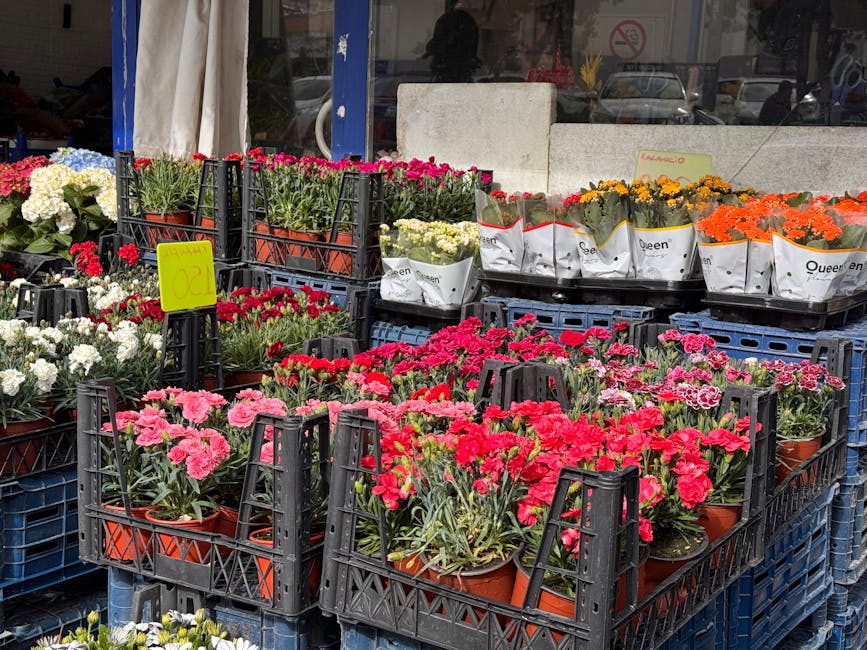
Efficient flower delivery routes and parking Mill Hill Broadway
Posted on 24/09/2026
If you have ever tried to deliver flowers in a busy part of London, you'll know the awkward little dance it can become: double yellow lines, a tight timetable, a bouquet that really should stay upright, and a customer who is expecting it to arrive looking as fresh as it did when it left the shop. Efficient flower delivery routes and parking Mill Hill Broadway is not just a transport issue. It is part logistics, part timing, part local knowledge, and part common sense.
In Mill Hill Broadway, where station traffic, high-street activity, and residential streets all affect access, a good delivery plan can mean the difference between a smooth handover and a stressful scramble. This guide breaks down how to plan smarter routes, park more safely, avoid delays, and keep flowers in peak condition from shop to doorstep. Let's face it, flowers are lovely; a stressed driver in a rush is not.
Table of Contents
- Why efficient routes and parking matter
- How route planning and parking strategy work
- Key benefits and practical advantages
- Who this is for and when it makes sense
- Step-by-step guidance
- Expert tips for better results
- Common mistakes to avoid
- Tools, resources and recommendations
- Law, compliance, standards and best practice
- Options, methods and comparison table
- Case study or real-world example
- Practical checklist
- Conclusion
- Frequently asked questions
Why Efficient flower delivery routes and parking Mill Hill Broadway Matters
Flower delivery looks simple from the outside. The bouquet goes from A to B, the customer smiles, job done. In reality, the best deliveries depend on careful route planning, safe stopping points, and quick adaptation when traffic, roadworks, or parking restrictions get in the way.
Mill Hill Broadway is the kind of place where a short journey can still become a slow one if you haven't thought it through. A delivery van may be fine on paper, but if it gets boxed in near the station or has to circle for parking, the whole schedule can slide. That matters for more than convenience. Flowers are time-sensitive. They need to be kept cool, stable, and handled with care. Every extra minute in traffic can reduce presentation quality, especially in warm weather or during busy seasonal periods.
There is also the customer side of it. A late bouquet for a birthday, anniversary, or funeral is not just a missed slot. It changes the experience completely. For a florist, reliability builds trust faster than a fancy box ever will. For a customer, it is the small details that count: the knock on the door, the condition of the flowers, the sense that someone has actually thought about the delivery journey, not just the arrangement.
Expert summary: efficient delivery in Mill Hill Broadway is about planning the route around the real street environment, choosing realistic parking options, and protecting the flowers at every step. Simple enough on paper. A bit more nuanced in practice.
How Efficient flower delivery routes and parking Mill Hill Broadway Works
At its core, the process is straightforward: map the delivery area, group orders sensibly, select the best vehicle for the load, and identify where stopping or parking is realistic. But the value comes from the details.
1. Route planning begins with the order list
The first task is to look at all the deliveries for the day together, not as isolated jobs. A route that seems obvious individually may be wasteful in sequence. If one order is near Mill Hill Broadway station and another is deeper into a residential side road, you need to think about which one should go first and which can be combined with nearby stops.
Good route planning usually considers:
- delivery windows
- distance between stops
- order size and fragility
- traffic pinch points
- likely parking availability
- whether a handover will be at the door, concierge desk, or workplace reception
2. Parking is part of the route, not an afterthought
Too many delivery plans treat parking as something to figure out once the driver arrives. That is where the headaches start. In a busy local area, a driver may need to choose between a quick stop, a short stay bay, or a brief legal loading position. The best flower delivery routes factor this in from the start.
In practice, that means asking: can the vehicle stop safely without blocking traffic? Is there a side street with better access? Will the driver need to carry arrangements by hand for a short distance? A florist's route is not only about roads. It is about the last 20 metres, and that bit is often the trickiest.
3. The vehicle has to match the job
Not every delivery needs the same vehicle. A compact car may be easier to park near Mill Hill Broadway than a larger van, especially for a few small orders. On the other hand, larger event deliveries may need more space, more protective packing, and more careful scheduling to avoid awkward manoeuvres. Choosing the right vehicle can save time and reduce handling damage.
4. Packaging supports route efficiency
It sounds obvious, but good packaging is a routing tool too. Secure boxes, water protection, and stable placement in the vehicle mean drivers can travel with less fear of stems shifting or blooms bruising. If flowers are packed well, a slightly longer route becomes much less risky. If they are packed badly, even a short hop can become a problem.
5. Real-time adjustments matter
Route plans are useful, but London has a habit of reminding you who is in charge. A delivery app may suggest the fastest way, yet a queue near the Broadway or a sudden service delay can change everything. The most efficient teams build in flexibility: a second parking option, a fallback contact number, and a willingness to reorder the route when needed.
Key Benefits and Practical Advantages
Efficient planning is not just about saving a few minutes. It changes the whole delivery experience.
- More reliable arrival times: better route sequencing reduces missed slots and awkward apologies.
- Better flower condition: less time in traffic and fewer unnecessary stops helps keep arrangements fresh.
- Lower stress for drivers: when parking options are thought through, the day feels less frantic.
- Improved customer satisfaction: punctual, tidy, careful delivery looks professional and feels personal.
- Better use of fuel and labour: fewer backtracks and less circling can make a noticeable difference over a week.
- Safer handovers: planned stop points reduce risky double-parking and rushed carrying.
There is a quieter benefit too: confidence. When you know the route makes sense, you stop second-guessing every turn. That calm shows in the delivery itself. Customers notice. They really do.
For florists offering services like flower delivery in Mill Hill NW7 or a faster option such as same-day flower delivery in Mill Hill NW7, that confidence is especially valuable. Timing pressure is easier to manage when the route is built properly from the outset.
Who This Is For and When It Makes Sense
This topic matters to anyone who sends or delivers flowers in and around Mill Hill Broadway, but a few groups feel it most directly.
Local florists
If you run a shop or manage deliveries, route efficiency affects cost, service quality, and reputation. A florist who can consistently navigate local roads and parking challenges has a real edge. Not a flashy edge, but a practical one - the kind customers remember when they need flowers again.
Independent drivers and couriers
Drivers working with fragile goods need a system that protects the order, the schedule, and the vehicle. Flowers are not parcels you can just toss in the back and hope for the best. They need a gentle ride, sensible parking, and a little patience.
Customers arranging time-sensitive gifts
If you are ordering for a birthday, hospital visit, workplace surprise, or condolence delivery, the reliability of the route matters even if you never see it. The bouquet still has to arrive at the right time and in one piece.
Event planners and corporate clients
Weddings, receptions, office flowers, and multi-drop arrangements all benefit from clean delivery sequencing. If one bouquet or display is late, the ripple effect can be annoying, expensive, and hard to fix at the last moment.
For larger or recurring orders, some businesses also look at corporate accounts, which can help simplify repeat delivery planning and make coordination a bit less chaotic.
Step-by-Step Guidance
Here is the practical version. No fluff, just the workflow that tends to work best.
Step 1: Group orders by area and timing
Look at the day's orders and cluster them by location first, then by delivery window. If two addresses are both near Mill Hill Broadway, put them together rather than running across town and back again. It sounds basic, but the savings add up quickly.
Step 2: Check access before dispatch
Before the driver leaves, confirm whether the recipient's address has parking restrictions, a gate code, a concierge, or a loading bay. A one-minute check can prevent a ten-minute delay. Sometimes it is a simple thing like "use the side entrance" or "call on arrival." Those notes are gold.
Step 3: Match the vehicle to the load
Use the smallest practical vehicle for the job, but only if it still protects the flowers properly. Compact vehicles often park more easily. Larger loads may justify a van with internal securing points and enough space to keep arrangements upright.
Step 4: Plan a primary and backup parking point
For each delivery cluster, identify one sensible place to stop and one fallback. If the first option is full or restricted, you do not want the driver starting from scratch. A backup stop can save the whole schedule.
Step 5: Pack for short carries
Assume that the driver may need to walk a short distance with the flowers. Use packaging that supports safe, upright carrying. A wet base, loose sleeve, or unstable box turns even a simple handoff into a slightly dramatic moment. Nobody wants that. Especially not at 8:40 in the morning.
Step 6: Keep delivery notes tight and useful
Clear instructions help everyone. Notes should be concise and practical: flat number, entrance details, safe place to leave, call instruction, and anything unusual about access. Avoid vague directions. "Near the roundabout" is not much help when you are carrying a vase in the rain.
Step 7: Reorder the route if conditions change
If traffic builds or parking becomes difficult, don't cling to the original plan out of habit. Reorder the remaining stops if it saves time and reduces risk. The best routes are the ones that adapt without falling apart.
Expert Tips for Better Results
These are the little details that often separate a decent delivery operation from a really reliable one.
Use delivery windows smartly
Rather than promising an overly tight slot everywhere, leave room for realistic travel conditions. A narrower window can be useful for special occasions, but only when the route makes it achievable. Too-tight timing sounds impressive until it becomes stressful. Then it is just noise.
Build around local rhythm
Mill Hill Broadway has its own rhythm through the day. Station activity, school runs, shopping traffic, and lunch-hour movement can all change the ease of parking. If you know those patterns, you can send the driver before the busiest stretch or after it has eased off.
Keep sensitive orders at the front of the vehicle
For funeral tributes, wedding pieces, or luxury arrangements, place the most delicate items where they are easiest to access and least likely to be disturbed. No one wants to unload five other items just to get to the one bouquet that should have been the easiest part of the job.
Don't ignore the return journey
Efficient routes matter on the way back too. If a driver can finish a stop and immediately head to the next sensible area, the whole day improves. A good route is like a tidy sentence. Everything follows in order, with fewer awkward pauses.
Use simple handover confirmation
A quick confirmation - name, time, and condition - helps reduce disputes and confusion later. It also reassures the customer that the order has been handled carefully. Small thing, big effect.
Practical insight: The best flower delivery routes are not always the fastest on a map. They are the ones that let the driver park safely, walk the smallest sensible distance, and hand over the flowers in the best condition.
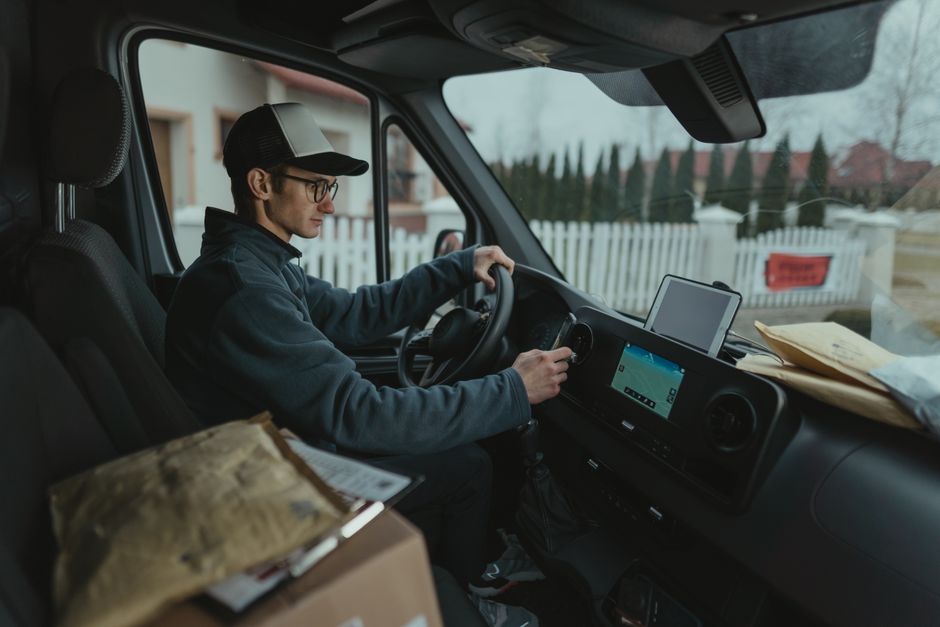
Common Mistakes to Avoid
Some delivery problems are predictable. The good news is that most of them are avoidable.
- Leaving parking until the last minute: this is the big one. Parking uncertainty creates delay, stress, and sometimes fines.
- Overloading one route: too many stops in one run can make every order feel rushed.
- Assuming all addresses are easy to reach: some buildings have access quirks that need to be checked in advance.
- Ignoring weather: rain, heat, and wind all affect handling. A windy day can be surprisingly awkward with larger arrangements.
- Using generic delivery notes: "leave safely" is not enough. Safe where, exactly?
- Choosing a vehicle that is too large: bigger is not always better if the area is tight.
One of the sneakiest mistakes is treating the route as fixed. The route is not sacred. It is a tool. If conditions change, adjust it. Simple, but not always easy when the morning is already moving fast.
Tools, Resources and Recommendations
You do not need a complicated system to improve delivery quality. In fact, overcomplicating it can make things worse. Start with a few reliable tools and habits.
What tends to help most
- Route planning software or maps: useful for sequencing multiple drops and checking travel time.
- Driver notes template: a simple standard format for access details, delivery windows, and recipient instructions.
- Vehicle check routine: a quick pre-departure review of fuel, packaging, water containers, and securing straps.
- Phone contact protocol: one number to ring if access changes or the recipient needs to be contacted.
- Delivery confirmation process: a consistent way to mark deliveries as complete and record any issues.
For customers who want to understand how dispatch and handover are handled, it can help to read the shop's general delivery information. That gives a better sense of timing expectations and how orders are usually managed.
It is also worth checking wider service policies, including guarantees, terms and conditions, and returns and refund information, especially if the order is time-sensitive or for a special occasion. Nobody loves reading policy pages, fair enough, but they do make life clearer.
And if you want care advice once the flowers arrive, flower care guidance is genuinely useful. Good delivery is only half the story; keeping the arrangement fresh after handover matters too.
Law, Compliance, Standards and Best Practice
For delivery work in London, compliance is mostly about safe, lawful, and considerate behaviour. The exact restrictions will vary by street, sign, and local conditions, so it is always wise to check the area rather than assume. In practical terms, the driver should avoid unsafe stopping, blocking traffic, or parking where restrictions clearly apply.
Best practice usually includes:
- respecting marked parking restrictions and loading limits
- keeping access routes clear for pedestrians
- using hazard lights only where appropriate and never as a substitute for legal parking
- avoiding unnecessary idling
- handling flowers carefully to minimise damage during loading and unloading
- keeping customer data and delivery details private and secure
There is also a broader standards angle. Customers expect punctuality, care, and sensible communication. That expectation is not written on a signpost, but it is very real. If a delivery cannot be completed as planned, the right move is to communicate clearly rather than improvise badly.
If you are reviewing a florist's wider business practices, their privacy policy, payment information, and about us page can also tell you a lot about how seriously they treat trust, customer care, and day-to-day professionalism.
Options, Methods, or Comparison Table
Different delivery methods suit different situations. Here is a simple comparison to help you judge what works best for Mill Hill Broadway and nearby addresses.
| Method | Best for | Strengths | Limitations |
|---|---|---|---|
| Single-stop local delivery | One bouquet to one nearby address | Fast, easy to manage, simple parking planning | Less efficient if several similar orders are waiting |
| Clustered multi-drop route | Several nearby Mill Hill orders | Saves time and fuel, better route efficiency | Needs careful timing and good order grouping |
| Vehicle-based van delivery | Bulk orders, event flowers, larger arrangements | More space, better protection for larger loads | Harder parking and more access pressure |
| Compact-car delivery | Smaller orders or tighter streets | Easier to park, less intrusive on narrow roads | Limited space for larger displays or multiple jobs |
| Timed premium delivery | Occasions where precision matters most | High customer confidence, strong service feel | Needs tighter planning and more contingency margin |
For most local florists, the sweet spot is a clustered route with a compact or mid-sized vehicle, sensible delivery windows, and a backup parking option. Nothing glamorous. Just effective.
Case Study or Real-World Example
Here is a realistic example from a typical busy day. A florist has three deliveries in and around Mill Hill Broadway: one birthday bouquet for a flat near the station, one sympathy arrangement for a house on a residential road, and one corporate vase arrangement for an office nearby.
At first glance, any order could go first. But after checking access details, the florist sees that the flat has a narrower delivery window and may be trickiest to park near. The office can accept a reception handover later in the morning, and the house is flexible. So the route is reordered: station-side delivery first, then the house, then the office.
The driver uses a smaller vehicle, keeps the bouquet upright in a secured box, and parks in a position that allows a quick hand-carry rather than a long wait for a perfect space. It is not a dramatic story. No one cheers. But the orders arrive on time, the flowers stay in good shape, and the driver avoids the usual spiral of "just one more lap around the block."
That is what efficiency often looks like in real life: quieter, cleaner, less impressive on the surface, but much better where it counts.
Practical Checklist
Use this checklist before dispatching a flower delivery route in Mill Hill Broadway.
- Are all orders grouped by area and timing?
- Have access notes been checked for each address?
- Is the vehicle suitable for the load and street conditions?
- Do you have a primary and backup parking plan?
- Are fragile arrangements packed securely and upright?
- Have you allowed enough time for parking and walking to the door?
- Are delivery contact details correct and easy to use?
- Is the route flexible enough to adapt if traffic changes?
- Do you know which orders are highest priority?
- Have you confirmed the handover process for each stop?
If you can tick all ten, you are in a much better position than most rushed delivery runs. And if one or two are missing, no drama - fix them before the wheels turn.
Conclusion
Efficient flower delivery routes and parking Mill Hill Broadway is really about respect: respect for the flowers, respect for the customer's time, and respect for the practical realities of local streets. A good route avoids needless driving, a smart parking choice protects both the bouquet and the schedule, and a little local awareness goes a long way.
Whether you are ordering flowers for a birthday, managing a busy florist schedule, or simply trying to make sure a thoughtful delivery arrives looking its best, the same principle applies. Plan the journey as carefully as the arrangement. That is the difference between a delivery that feels rushed and one that feels considered.
Get a free quote today and see how much you can save.
And if you are sending flowers in Mill Hill Broadway soon, take one extra minute to plan the route properly. It really does make the whole day feel easier.
Frequently Asked Questions
What does efficient flower delivery routes and parking Mill Hill Broadway actually mean?
It means planning flower deliveries so the route is short, sensible, and timed well, while also choosing realistic parking or stopping points near Mill Hill Broadway. The goal is to protect freshness, avoid delays, and make handovers easier.
Why is parking such a big issue for flower delivery?
Because flowers are fragile and time-sensitive. If a driver spends too long searching for parking, the delivery runs late and the flowers may suffer. Good parking planning helps keep the order stable and the whole process calmer.
How do florists usually plan delivery routes in Mill Hill Broadway?
They normally group orders by location, then by delivery window, then by access difficulty. That way nearby addresses are delivered together and parking needs are considered before the driver leaves.
Is same-day flower delivery harder to manage locally?
Yes, it can be. Same-day work leaves less time for route adjustments and parking checks, so the plan needs to be tighter. That is why same-day orders benefit from clear notes and a flexible route structure.
What kind of vehicle is best for flower delivery in busy areas?
A compact or mid-sized vehicle is often easiest for tight streets and quick stops, but the right choice depends on the size of the order. Larger event arrangements may need a van with more secure space inside.
How can flowers be kept fresh during delivery?
Keep them upright, stable, and protected from heat or direct sunlight. Use suitable packaging, avoid unnecessary delays, and hand over the arrangement as soon as possible once you arrive.
Do I need special parking knowledge for Mill Hill Broadway?
You do not need specialist training, but local awareness helps a lot. Knowing where stopping is likely to be practical, and where it may be restricted or awkward, saves time and stress.
What are the most common delivery mistakes to avoid?
The biggest mistakes are poor route grouping, leaving parking decisions too late, using the wrong vehicle size, and ignoring access notes. These small errors can become surprisingly disruptive.
Are delivery notes important for flower orders?
Very much so. Clear notes help the driver find the address, identify the right entrance, and complete the handover without wasting time. A few precise instructions are better than a long vague paragraph.
How do I know if a florist is reliable for timed delivery?
Look for clear delivery information, sensible service policies, and a professional approach to handling orders. If the business explains its process clearly, that is usually a good sign.
Can efficient routing lower delivery costs?
Often, yes. Better routing reduces wasted travel and makes the day more productive. Over time, that can improve efficiency and help keep service prices competitive.
What should I do if the recipient is hard to reach?
Use the delivery contact process provided by the florist and keep notes short and clear. If the building has a concierge, side entrance, or alternate handover point, that should be mentioned in advance where possible.